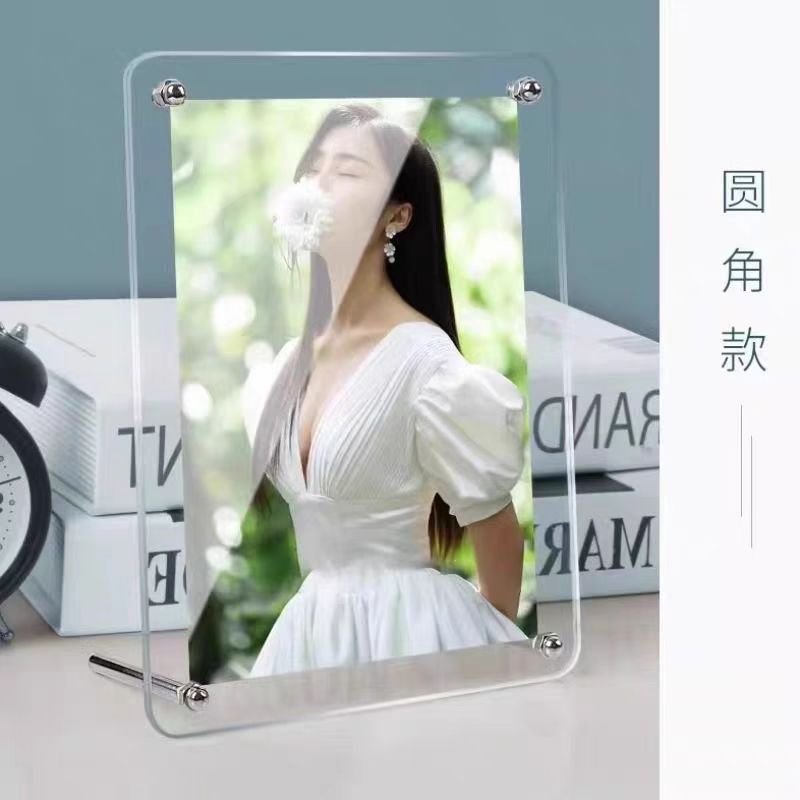
Product Description
Introduction to UV Printing of Acrylic Photo Frame
Acrylic UV printing is a digital printing process that combines UV flatbed printing technology with acrylic (PMMA organic glass) material, directly printing high-definition patterns on acrylic sheets and curing them in real time. It is currently the mainstream solution in the field of high-end photo frame customization.
1、 Basic principles
Link description
The piezoelectric printing nozzle directly sprays UV ink onto the surface of acrylic, with a resolution of up to 1200-1440dpi
Curing UV LED lamp (wavelength about 365nm) irradiation, the photosensitive curing agent in the ink crosslinks and forms a film in milliseconds, which dries immediately after firing
Adhesion treatment: The acrylic surface is smooth, and it needs to be cleaned and dusted before printing, and a special coating should be sprayed to prevent the pattern from scratching and falling off
Acrylic has a light transmittance of up to 92%. PMMA has a stable molecular structure and low thermal expansion coefficient, which can firmly "lock" the UV ink layer without cracking or smudging.
2、 Two core processes
Process Features Visual Effects
The positive spray (front spray) pattern is directly printed on the front of the acrylic, which can be overlaid with 3D relief and glossy effects, with a clear tactile sensation. The pattern is within reach, and the texture is high-end, wear-resistant and durable
Back spray (back spray painting) printing on the back, retaining the smooth touch of acrylic when viewed from the front, using the thickness of the board to create a depth of field effect, resulting in a deeper and more transparent image
3、 Compared to traditional silk screen printing, it has advantages
Comparison Dimension UV Printing Screen Printing
Plate making does not require film/screen printing, and each color needs to be made separately when there is a picture file. The cost of multi-color printing is high
Gradient/photo grade image ✅ Perfect support, natural color transition ❌ Difficult to implement, suitable for solid colors
The minimum printing quantity is usually sufficient for a single piece, and it requires a certain minimum printing quantity to be economical
Special effects such as 3D relief, matte, glitter, fluorescent oil, metallic color, pearl and other special inks are stronger
Good adhesion, strong outdoor color retention for 5-8 years, slightly better scratch resistance
Large area solid color uniformity slightly inferior, more uniform and flat
Summary in one sentence: Multiple colors, gradient, small batch, personalized → Choose UV printing; Solid color in large quantities, requiring special particle ink → Choose silk screen printing.
4、 Core application scenarios
Typical scenario products
Wedding photo studio/photo studio, acrylic photo frame for wedding photos, personal photo stage
High end home decoration paintings, restaurant menu boards, hotel art hanging paintings
Commercial space brand culture wall, signage, product display rack
Creative gifts, personalized medals, wedding invitations, refrigerator stickers, 3D decorations, concert ticket stubs
Advertising signage lightbox panels, mall signs, corporate image walls
5、 Key points of production
Clean environment: Acrylic is prone to absorbing dust, so it must be wiped with a dust-free cloth before printing to prevent white spots and graininess
Nozzle spacing calibration: Too high or too low can cause blurring and ghosting
White Ink Primer: When printing on transparent or dark acrylic, a layer of white ink should be applied as the base layer first
Gloss protection: can be overlaid with glossy/matte/textured gloss to enhance wear resistance and tactile sensation
6、 Error remedy
Discovery of time processing methods
Instant alcohol spray, wipe with a soft cloth to remove
Soak in alcohol for 30 minutes within 12 hours, and the pattern can be peeled off
If it exceeds 24 hours, it needs to be cleaned with professional solvents such as hydrogen peroxide and banana oil
The essence of acrylic UV printing is to "grow" patterns into the material - not by stacking coatings, but by integrating information with transparent materials. When sunlight shines, the characters "float" in the light. If you have specific photo frame sizes, uses, or design requirements, you can further discuss the details.